How We Learn
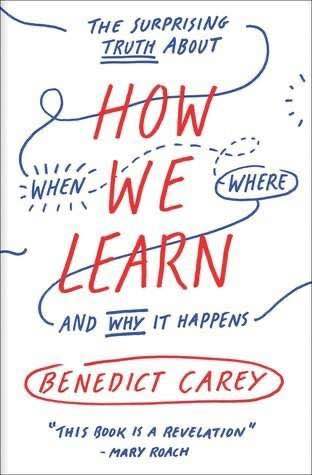
How We Learn: The Surprising Truth About When, Where, and Why It Happens
by Benedict Carey
Random House (2014)
Find a copy:
- Bookshop.org (affiliate — supports this site)
- WorldCat (library)
I am a bookworm. I like to read across disciplines to improve my work and assist my clients. Two books I recommend are How We Learn by Benedict Carey and Smarter Faster Better by Charles Duhigg. When read together, they provide insight into ways we can learn to increase our productivity.
I remember getting in trouble in fifth grade. I wasn't writing an essay that afternoon, I was staring off into the unknown day dreaming about something. After my teacher's admonishment I got to work writing and won that month's writing contest for my grade level.
Are we supposed to always buckle down in monk-like focus and silence in order to learn? Carey explores and tests recent research, in this book he shows how our growing understanding of the brain has transformed both learning and teaching. Along the way he discovers that a singular approach is not practical for actual learning. For example, spacing study sessions will create improved long-term recall. I know that the subjects I crammed for were soon forgotten after exams. Repetition and rote learning cause a steep initial curve followed by a plateau. Interleaving materials and study process will help long-term. It's tempting to devote hours to a particular problematic area, for example a section of a concerto. Interleaving that technical passage with scales and earlier studied works will help improve that sticky passage. One of the lessons that was difficult for me to grasp for years is that naps and sleep are beneficial to recall and comprehension.
Carey's work is interesting as it turns much of what I was taught to be a good student on its head and inside out. While all the hours of learning matter, the way we break down the time and use it can be all the difference between comprehension and confusion.
Disclosure: I first discovered both of books through eARC requests through NetGalley in exchange for a review. The review copies expired long before I wrote this post. Both titles were borrowed from my local public library for the purpose of reading and drafting of this review. The FTC wants you to know.