The Heat Will Kill You First
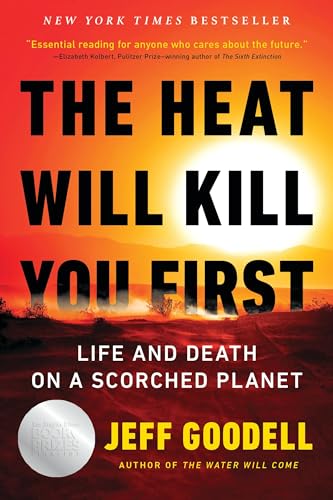
The Heat Will Kill You First: Life and Death on a Scorched Planet
by Jeff Goodell
400 pages, Little Brown and Company (2023)
Find a copy:
- WorldCat (library)
I didn't read Jeff Goodell's The Heat Will Kill You First when it came out in 2023. That was a difficult year for me, and climate books felt like too much. When I spotted it at the library a few weeks ago, I knew I needed to read it and was ready for the weighty topic. It connects directly to my work on resilience and business planning, plus I've always been fascinated by weather (despite acing but absolutely hating earth science in 8th grade due to how it was taught). Reading it this August turned out to be perfectly yet uncomfortably timed.
Goodell doesn't treat heat as just another climate bullet point. He makes it visceral: relentless, patient, deadly. His starting point is the 2021 Pacific Northwest heat dome, when temperatures hit levels these regions had never planned for. Two years later, "never planned for" feels quaint. What used to be freakish is becoming routine.
The book follows heat's victims and survivors across continents. From farm workers to residents of housing projects without air conditioning or the power to run it. European cities buckling under unprecedented temperatures. Each story builds the same tragic case: heat kills quietly, and we're not ready for it. We guarantee the right to heat in winter, but cooling isn't as universal.
What struck me most was how invisible heat deaths remain. More people die from heat annually than from floods, hurricanes, or tornadoes combined, yet we barely track it. When someone dies in a flood, it's obvious. When someone's heart gives out during a heat wave, it gets filed under "natural causes." Goodell argues this isn't accidental.
Part of what makes heat such a silent killer is how deceptively normal it looks. A hurricane changes the sky, turns the world dark and violent. But 65 degrees and sunny looks exactly the same as 100 degrees and sunny from inside a window. The danger is invisible until you step outside, or the air conditioning fails.
Reading this in August, when I realized I'd barely spent any time outdoors because of the heat, his warnings felt immediate. I kept thinking about the cooling centers he describes. Here in once-temperate Westchester County, my public library often closes in the summer at 8 PM (if not earlier). What happens to vulnerable people when they must go back out into the heat? That's assuming they could reach the library safely in the first place, that a bus stop was nearby, that they didn't need to stant in the sun since shelters are scarce. That's when the real danger sets in. Cooling centers sound helpful, but do they actually solve anything for the people most at risk?
The book strikes a balance between urgency and realism. Goodell shows cities trying to adapt: appointing chief heat officers, naming heat waves like hurricanes. But these efforts feel scattered against the scale of what's coming. His message is clear: technology alone won't save us from this. We need different cities with more parks and green spaces, buildings designed for extreme heat, work schedules that account for dangerous temperatures, and different ways of caring for each other.
I kept marking passages that many others likely marked two years ago, but I was highlighting them as confirmations rather than warnings. Goodell's scenarios weren't predictions of some distant future; they've become our present reality.
This book confirmed what I've been seeing in my resilience work: we often choose to avoid change, so we plan for the wrong timeline and misjudge how quickly things are shifting. The extreme heat events Goodell describes aren't distant possibilities; they're this summer's headlines. Reading something published just two years ago felt like trying to catch up with a train that's already left the station. It's a necessary read, but it feels daunting.
I recommend The Heat Will Kill You First knowing it's not about the future, it's about today. The opportunity to prepare is still here, but it won't be for long.